Manu-kau Noa Iho | Hayman Park
Location: Manukau
Client: Auckland Council Healthy Waters & AUDO
Services: Native Plant Supply, Planting, Establishment & Maintenance
Lead Contractor: HEB Construction
Manu‑kau Noa Iho / Hayman Park is the primary public open space in Manukau.
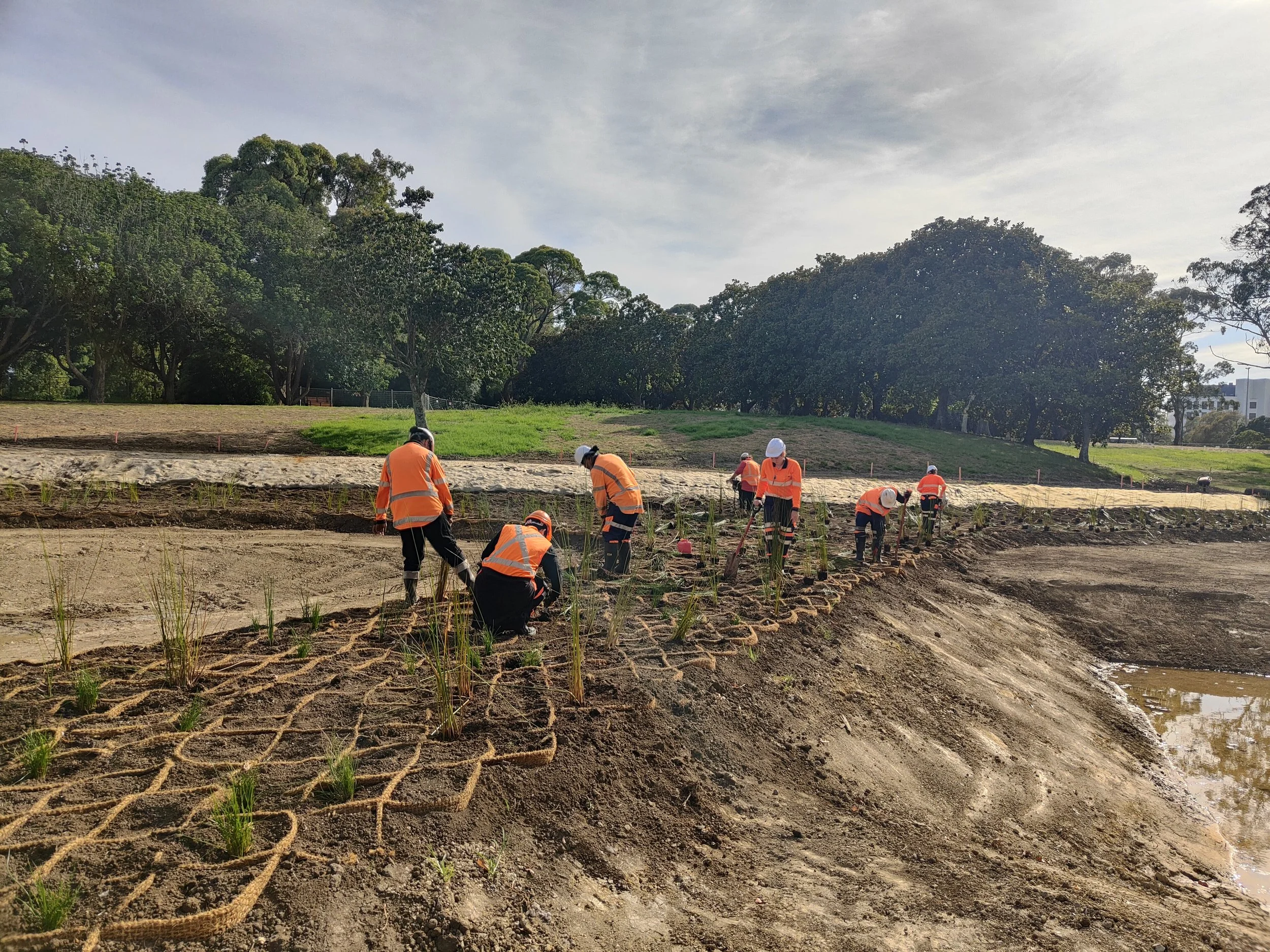
The Hayman Park project is restoring a legacy stormwater pond system into a naturalised wetland with native planting, improved stormwater treatment, and stronger connections for people and wildlife before flows reach Te Puhinui awa and the Manukau Harbour.
Our role.
Eco-sourced wetland and riparian plant supply aligned to mana whenua and design-led habitat outcomes.
Wetland planting installation and staged establishment across the pond-to-wetland conversion.
Aftercare, weed control, and replacement planting to achieve performance targets through establishment.
Social employment pathways delivered through on-the-ground ecological works and ongoing maintenance.
Coordination with path interfaces, entry upgrades, and art placement zones to protect new plantings and habitat areas.
Impact.
Works were scheduled from 2025 through mid- 2026, with park areas temporarily closed during construction. The programme will create a new repo (wetland) with native planting and wildlife habitat, improve water quality before flows enter Te Puhinui and the Manukau Harbour, add accessible pathways and revitalised entries, and install a litter-capturing device as part of a natural treatment approach.
Our Environmental Services team planting the new repo (wetland) at Hayman Park.
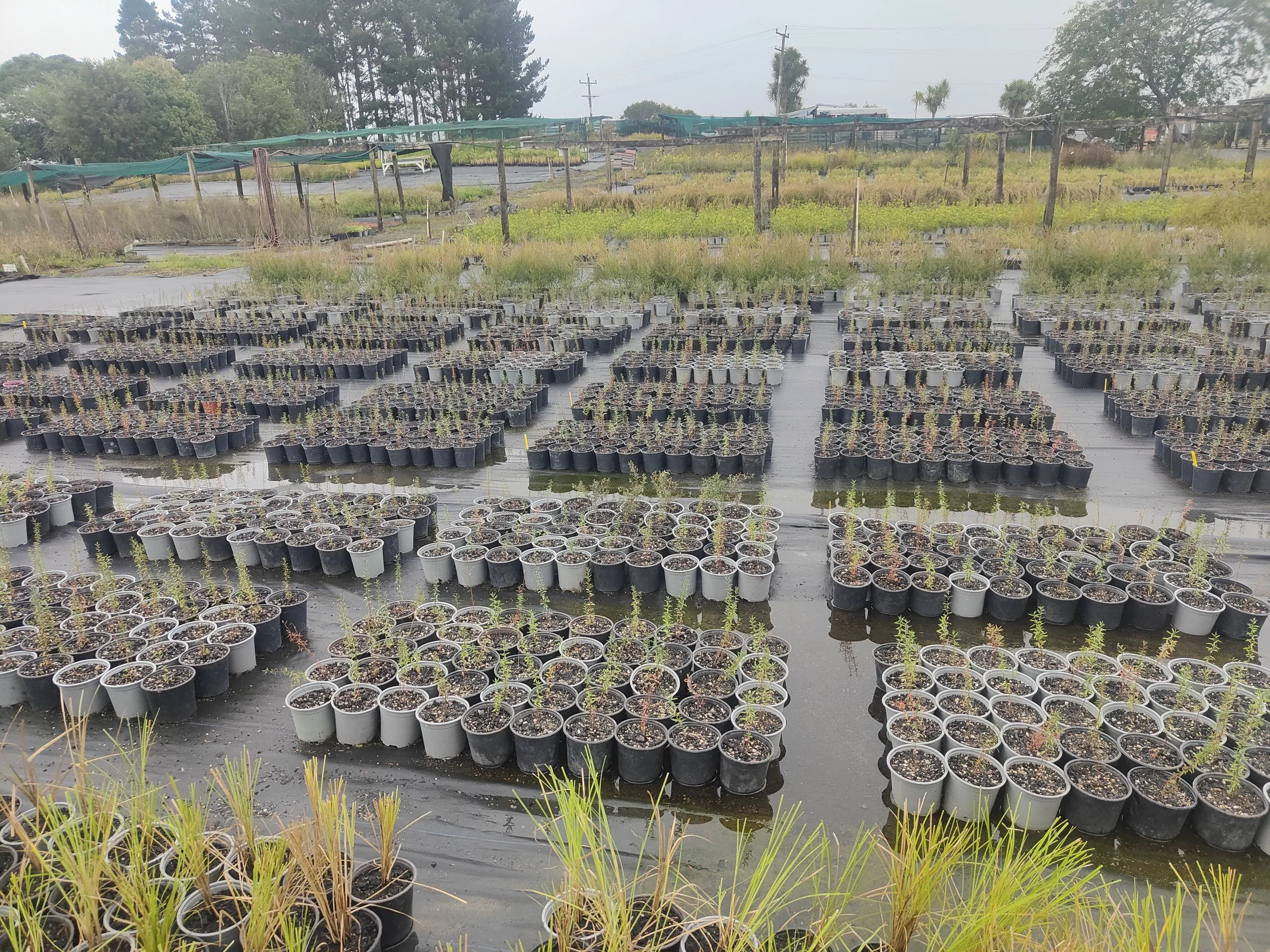
Native plants growing in the Pūkorokoro nursery.
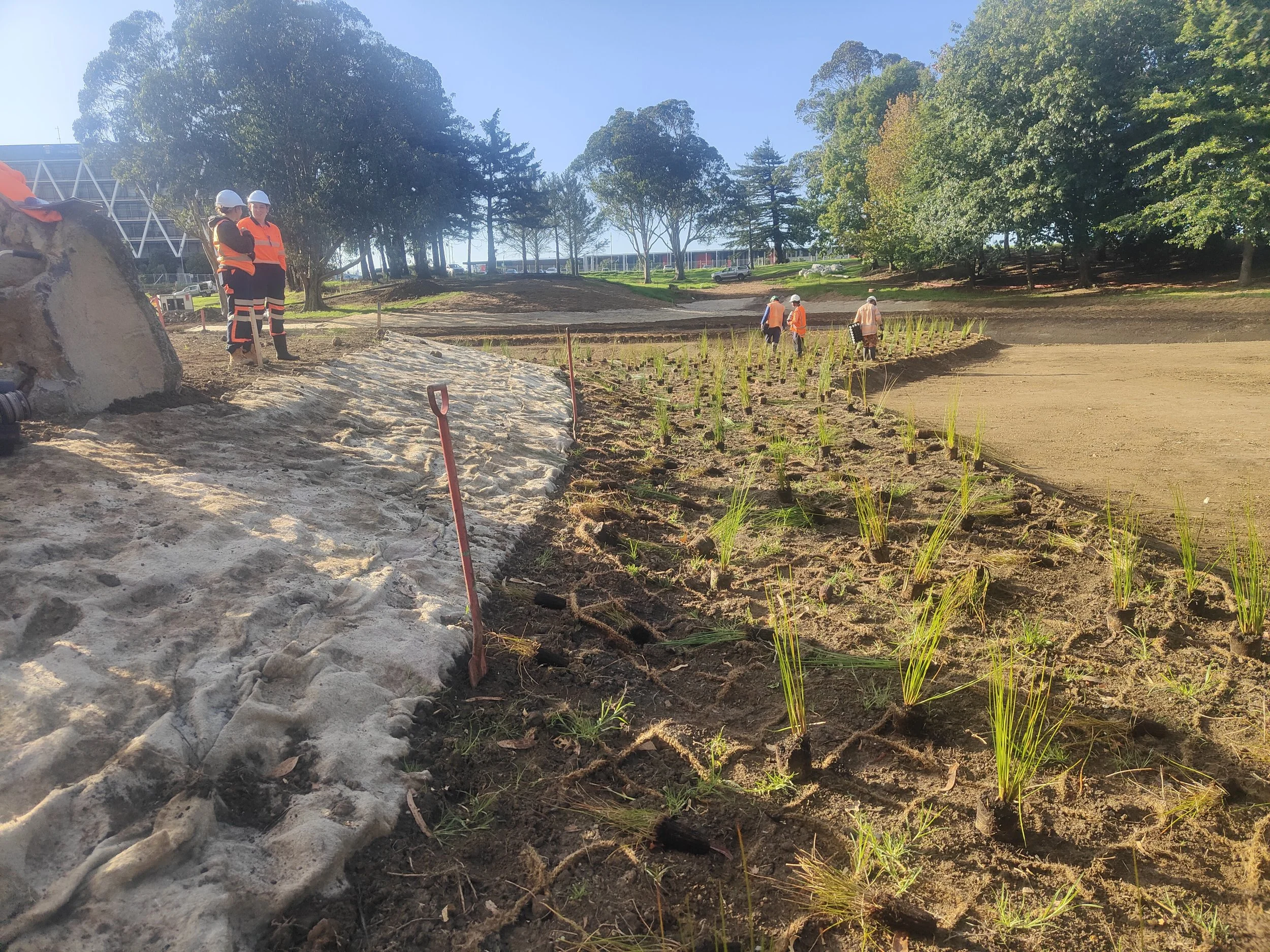
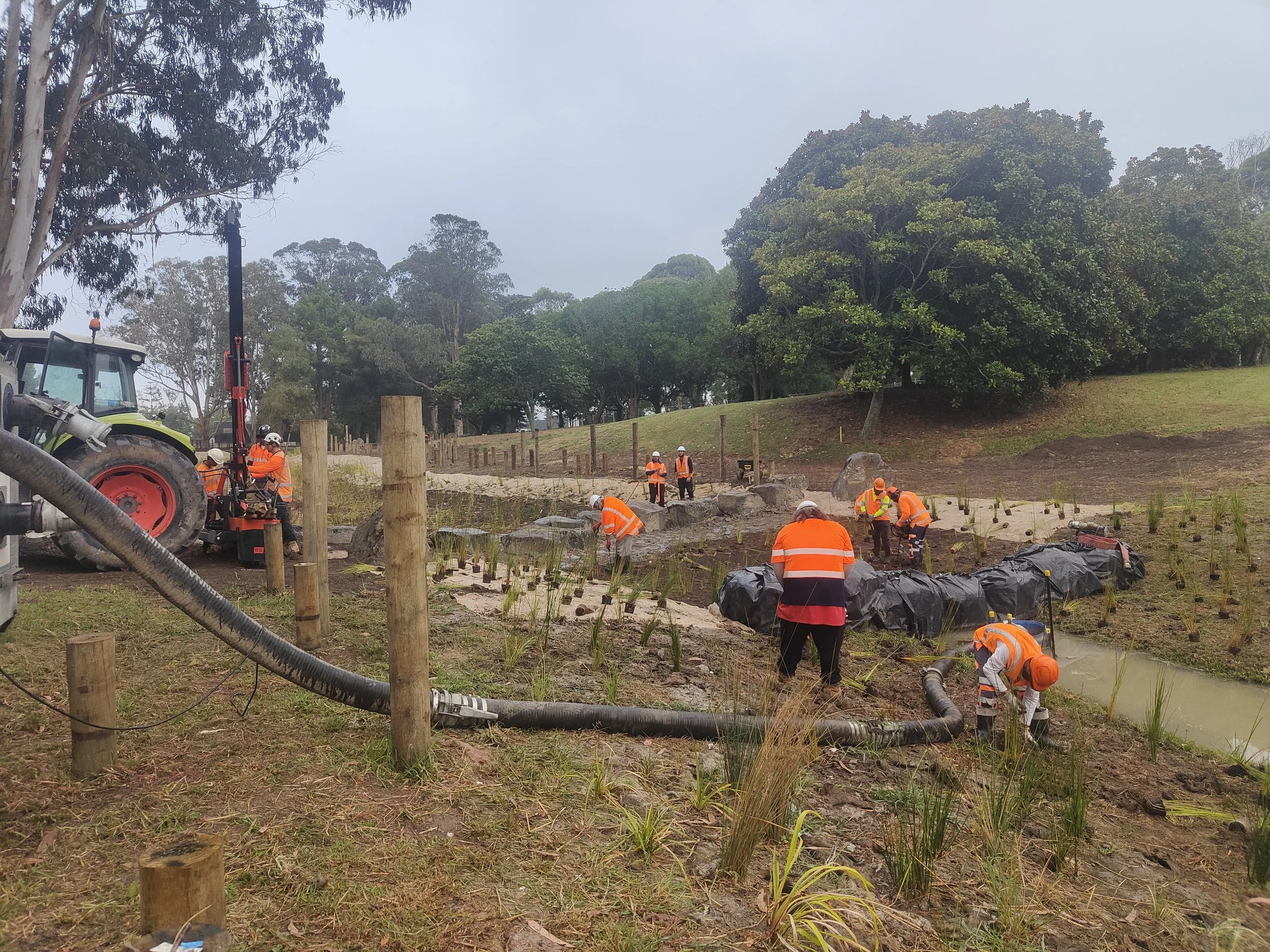
Laying out plants in the wetland emergent zones before filling.
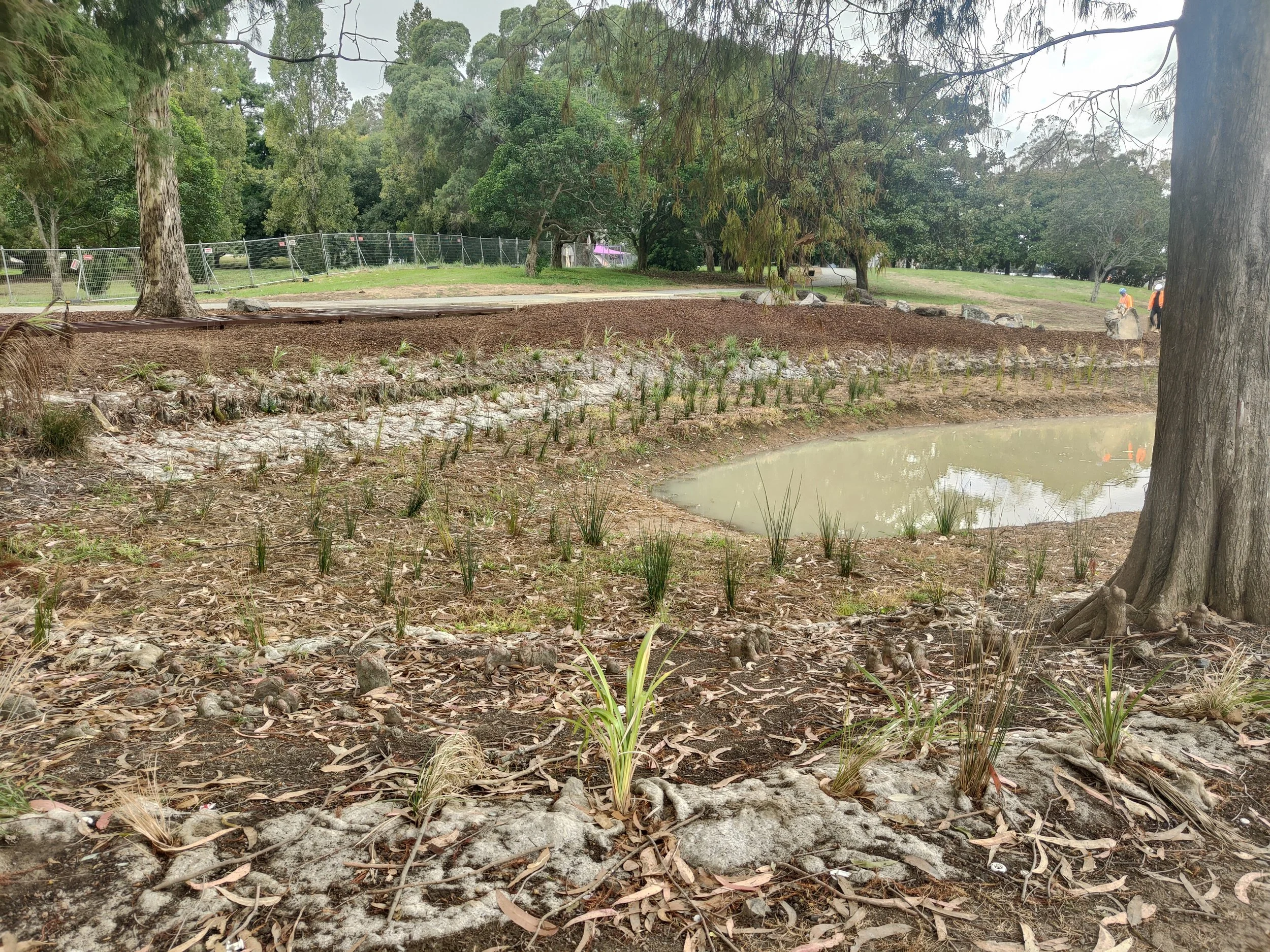
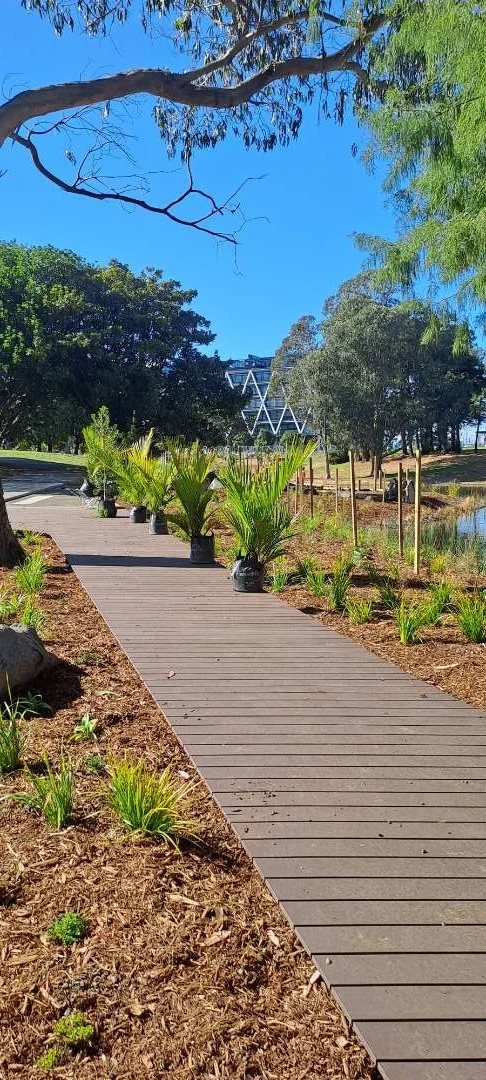
Plant establishment in progress along the wetland edge.
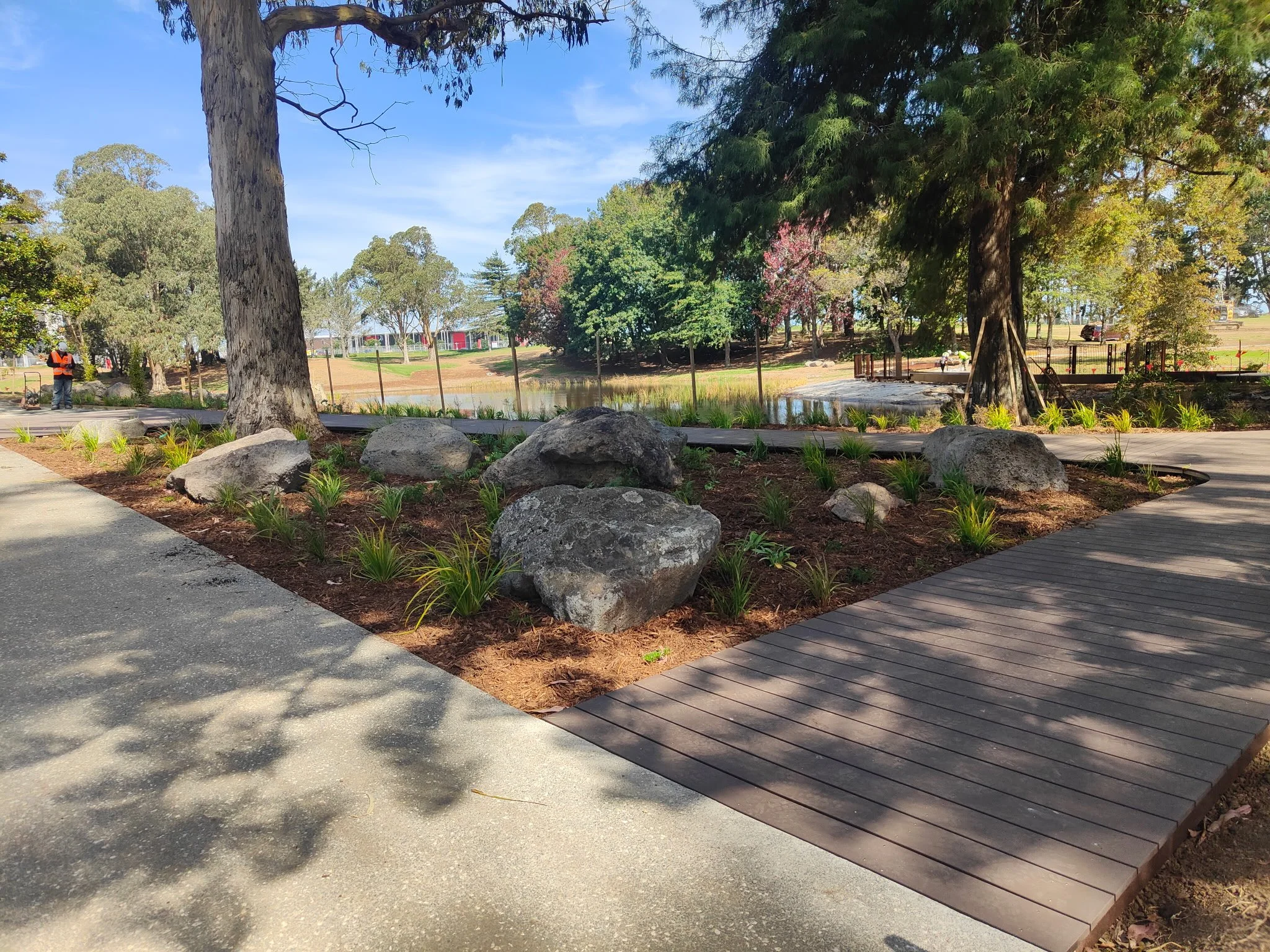
Results of a community planting day.
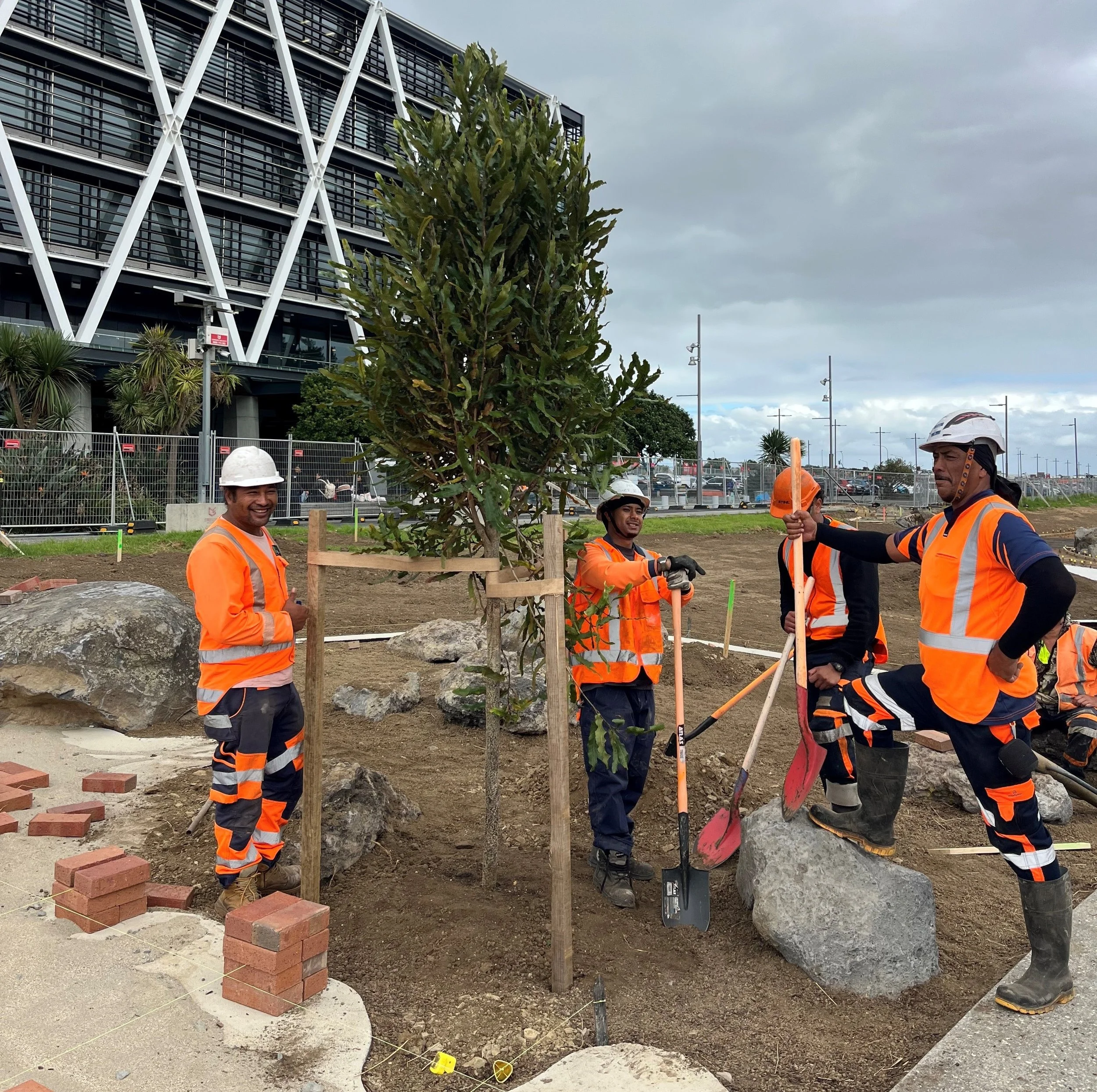
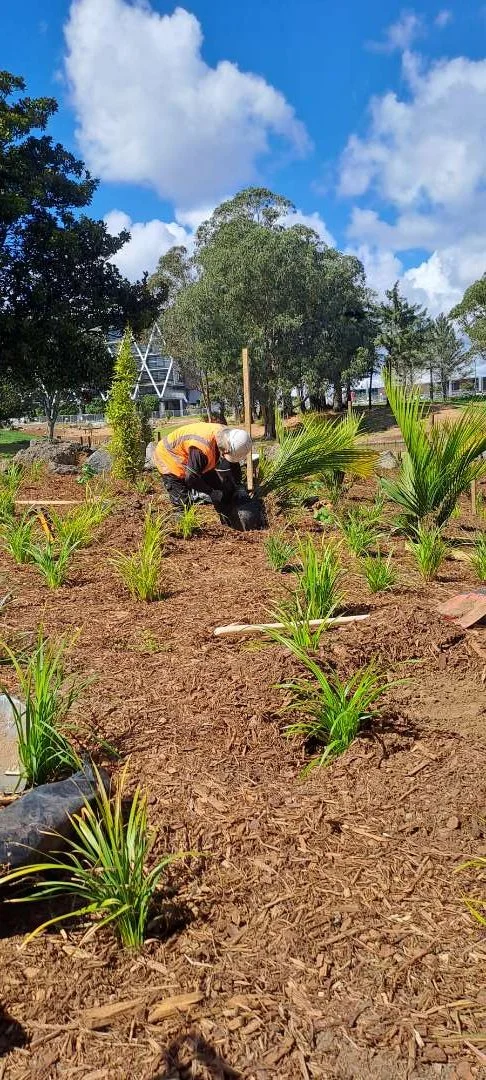
Our team planting specimen trees along the park edge.
Awards & recognitions
The Hayman Park redevelopment has already gained recognition via the destination playground:
NZILA Award of Excellence (2024): Hayman Park Playground (Play Spaces category).
NZIA New Zealand Architecture Awards (2025): Hayman Park Playground shortlisted (Planning & Urban Design category).
The wetland project also aligns with the award-winning Te Whakaoranga o Te Puhinui strategy, which has received major national and international recognition.